March 15th, 2024
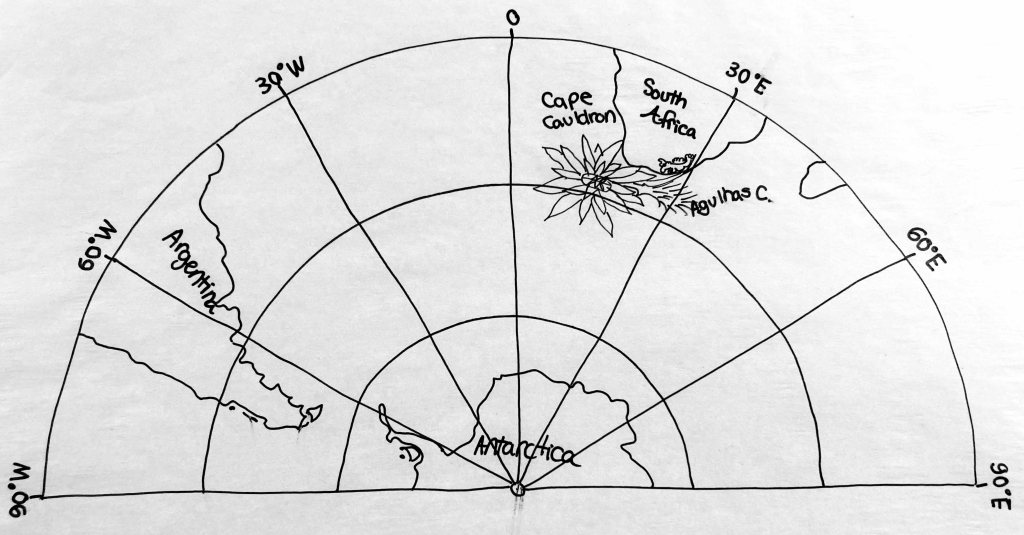
MS408 Folio 25v has always intrigued me as it has a cute little dragon perched in a corner with some shady side eye. We posted over two years ago our translation and coordinates of Folio 25v, Cape Cauldron just south of South Africa. After reading a Facebook post from Marcuzio Isauro, he made a very excellent observation that the little dragon was called “Draco Helveticus.”
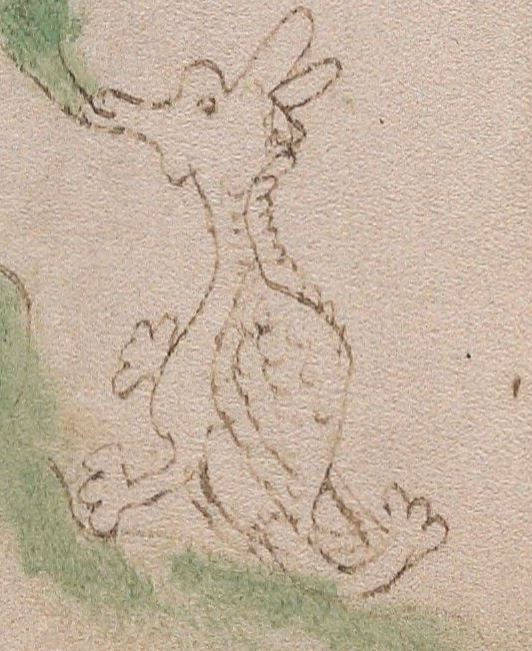
Draco Helveticus is historically one of the most important celestial constellations as it was the primary stars in the BC’s used to navigate. Draco is circumpolar and can be seen in the northern latitudes year round. In Chinese trade cultures Draco is known as the Julong (Tucker STEM Team wrote extensively in book “Land of Pu”), other trade cultures would call it the Southern Cross. Below are images of the Chinese Julong in several different types of artifacts in the Tucker Museum.

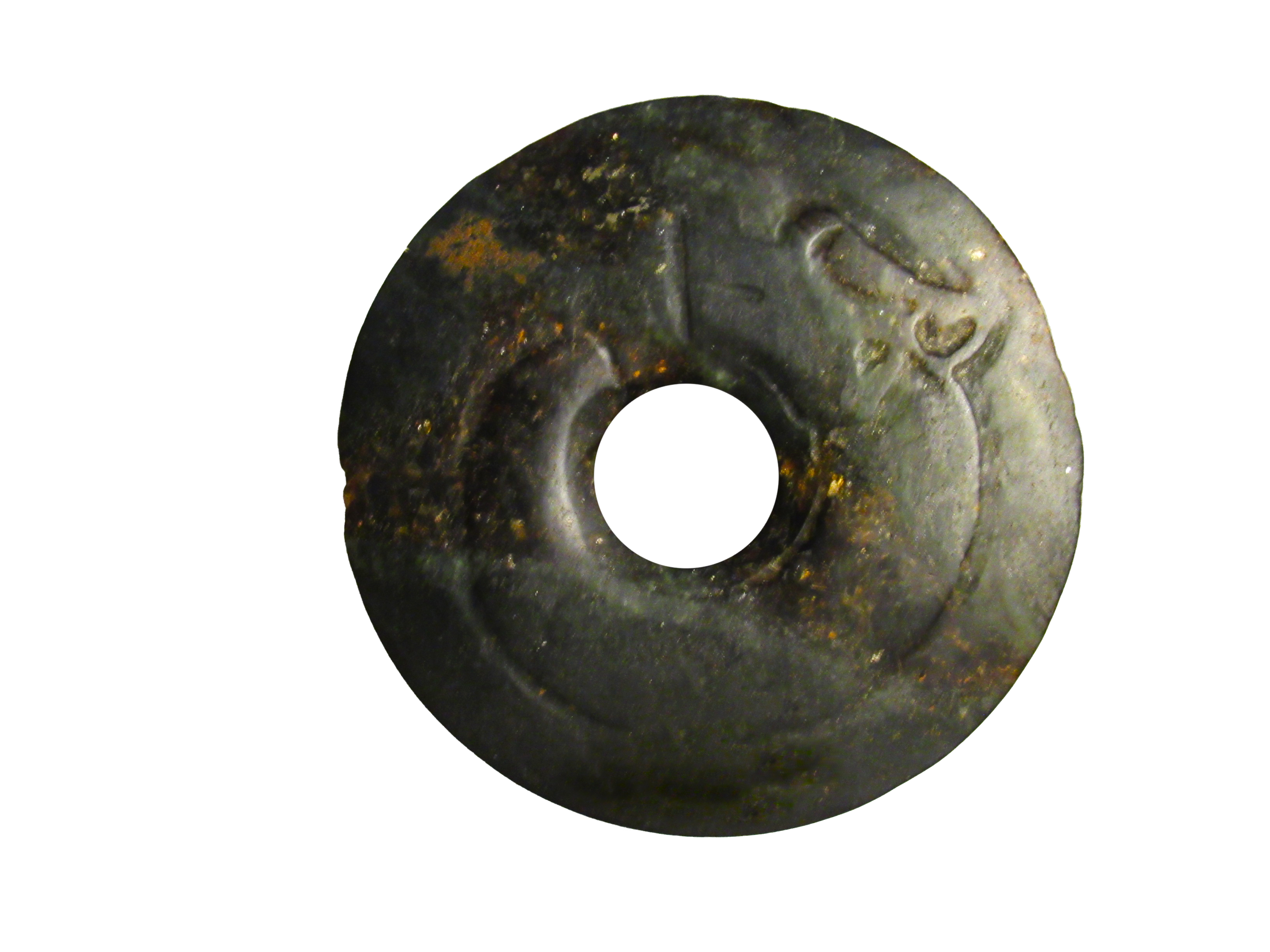
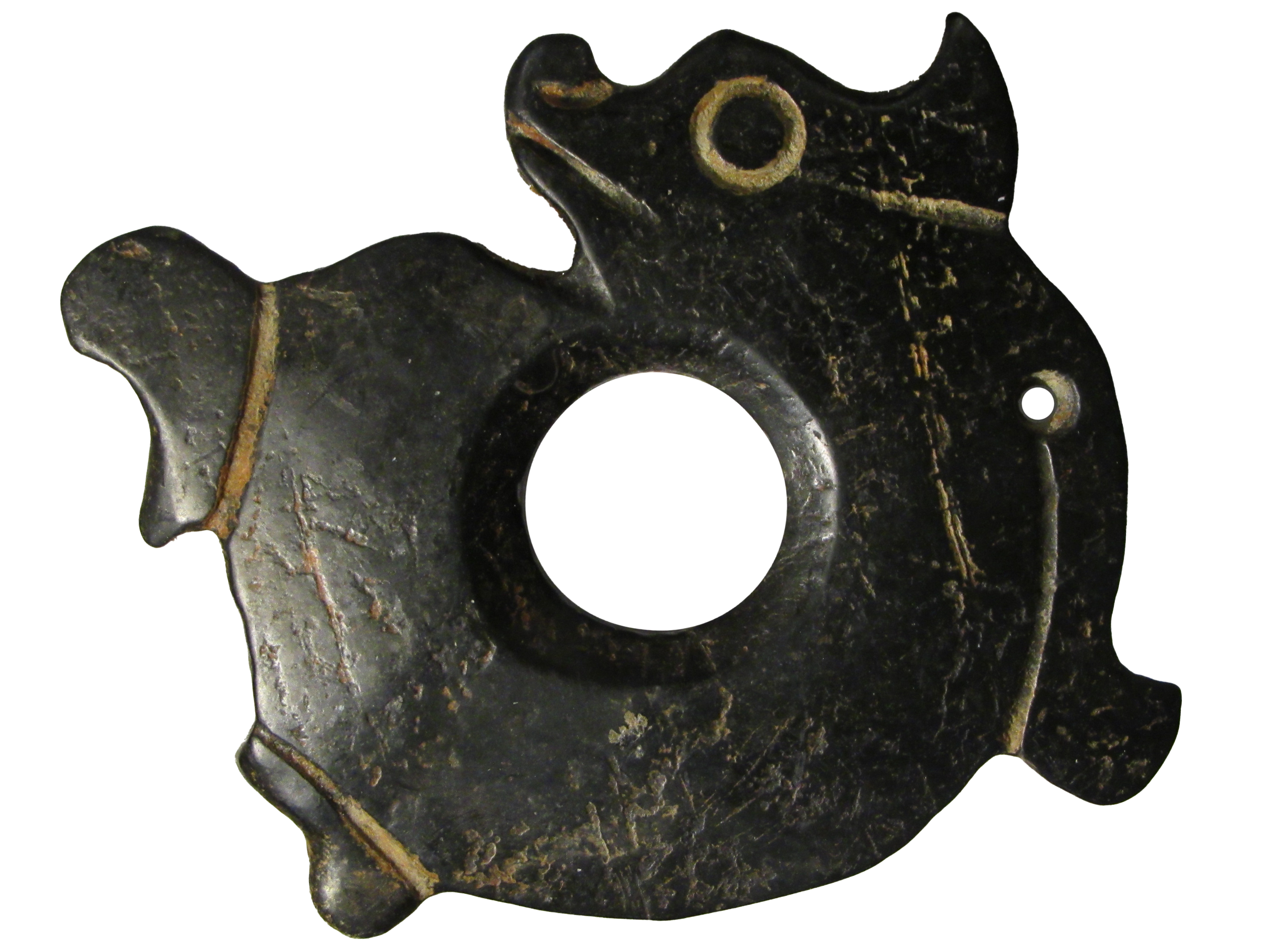
The authors of MS 408 choose to place Draco in Folio 25v – but why? If Draco could be used anywhere in the world, why did the MS 408 authors choose South Africa?
- The Draco Constellation was known as the center of the celestial sky. 0°
- Star Declination +65°
Where on Earth is 0° x 65° South? The beginning coordinates for Cape Cauldron near the South Atlantic Current. The MS408 authors very cleverly disguise meanings like Draco to pin point geolocation on Earth. The beginning point of Folio 25v is exactly 0° x 65° South.
Folio 25v: To Enter use Arc Length
DATA:
Location: Approaching South Africa
Geolocation: 65°00’S/0°00′
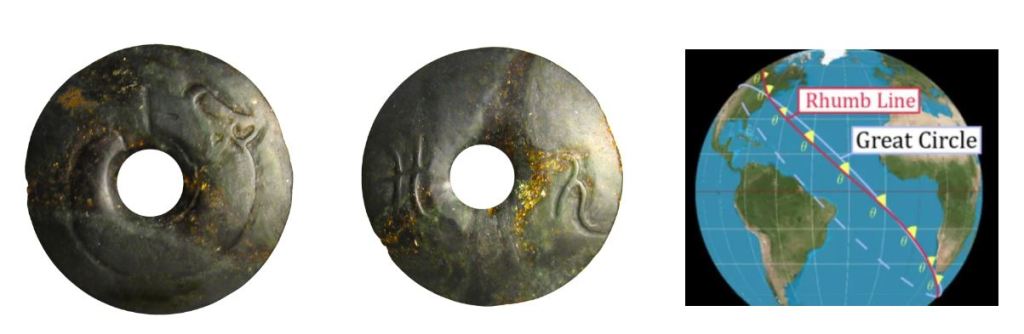
Math: The Great Circle; Length of an Arc, leaves represent Coriolis force.
Ocean Currents/Gyre: South Africa Retroflection, Cape Cauldron
Ethnobotany: Rose Atlas from the Catalan Atlas
Artifacts: Silk Road Artifact Bi 15B/F “ju” meaning “to enter.” Burial “Bi” where used along the silk road as navigation tools and trade tokens. Symbol used as arc length.
TRANSLATIONS:
Peyom jeta va som jepuia eluia jepuer rer
Suer uler uer som r etyom som utia som
Erue luer uei som vupe r som svia soyla
Jetem jelue vei som utior utei som utior
Sor uotya sver svia jeuei sei ue som som
Jetue reua jelua je teroi || ue (θ × (π/180) × r) uon syocr r
Eve utia soyei som vut || er uom
“Being the highest degree. Get the velocity of an orifice measurement. The entrance is a separate entry located in the back. Confirm and settle the wind measurement radius, it eddies the measurement and borders the known world measurement. You are throwing out, it lures time measurement. The velocity away from the surface of the Earth rhumb measurement is the speedway. Makes it invalid, guesses and dams. Mark the measurement, employ so that the measurement employed fortifies knowledge. To assure the speedway giveability see the author’s measurement. The measurement instruments the wheel divider. Away it twists. The authors Length of an Arc = θ × (π/180) × r, a resource, speed x arc length x angular radius = speed of rotation of Earth, rhumb traces the boarders of the known world. Transforms the measurement, vowing as the crow flies.”
So, there you have it folks. The MS408 riddles of math are so accurate there is no other way to translate it. If the math works – it works. You can’t fake math!
 Tucker STEM Team