Captain’s Blog 4/22/2025
A long-overdue post regarding the linguistic rules of Yale MS 408, the Voynich Manuscript. In other posts, I go over the cypher and how it works, this post is strictly on the linguistic rules after decoding a page.
One of the most complicated aspects of the VM language is that its major roots are Middle English. Middle English had no consistent spelling rules; words were generally spelled phonetically, reflecting how they were pronounced by the writer or scribe. Five scribes spanning across multiple generations add another layer of complexity. This meant that the same word could be spelled in multiple ways, even within the same text by the same scribe. and.. it isn’t wrong. In my Book “The Lost Language of Braveheart and Robert de Bruce King of Scots,” some of the phonetic choices in the VM were laid out. After 4 years since I’ve published this book, I refer to this chapter on a daily basis.
Here’s a more detailed look at Middle English spelling:
Phonetic Spelling: Writers and scribes often wrote words as they sounded, leading to a lack of standardization.
Vowel Pronunciation: Vowel pronunciation could be variable, particularly in unstressed syllables, and this variability was reflected in spelling.
Lack of Standardized Spelling: The absence of a formal spelling system resulted in a wide range of variations in how words were written, even for the same word.
Dialectal Influence: Regional dialects played a significant role in how words were spelled, contributing to the lack of uniformity. The dialect used is a high-brow Galwegian/Scots-Middle English.
Engineer Speak: The authors of the VM were engineers, scientists, and the Navy. Engineer speak uses everyday common words, but has a dramatically different meaning. For example: to stake. A surveyor stake is used to mark properties. Non-engineers may mistake this for “to stake a wager or bet.”
Pronunciation Guides: Due to the lack of standardized spelling, it can be difficult to provide a single pronunciation guide for Middle English texts. The guidelines that are in my book and in this blog post were observations made when researching the etymology of each individual word. It is not all-encompassing.
Silent -e: Final “-e” was often silent, especially in poetry, but it was still used to indicate long vowels. However, in Middle English, “e” and “a” are interchangeable. The VM authors used a final silent “-a”.
Yogh (ȝ): The letter “yogh” (ȝ) was used to represent various sounds, including “j” and “s”, and its pronunciation depended on the context. The VM authors combined yogh, g, and j as one symbol. In my transliterations, I use the symbol “j” but more often it is a g or yogh.
The following is an Excerpt from “The Lost Language of Braveheart.” Published 2022.

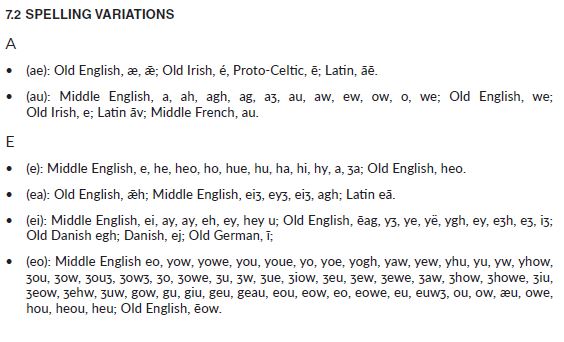
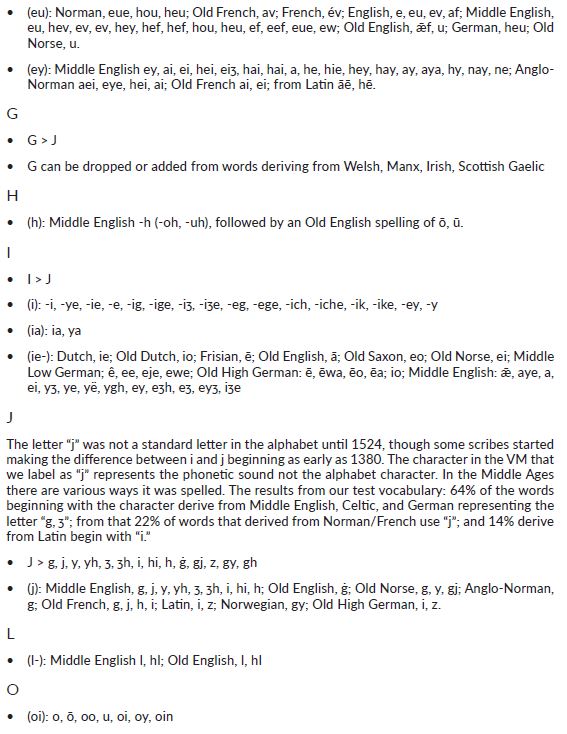

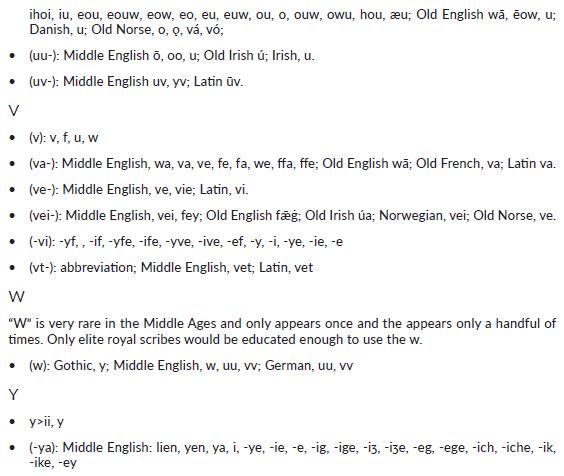
Prefixes, Interfixes, and Suffixes
Follow the rules by the letter. If the prefix is Middle English the suffix will be Middle English; if the prefix is Scots/Welsh/Irish the suffix is Welsh. Borrowed words from French, Norwegian, or Dutch would have Middle English suffixes. The exact location of who used the manuscript is vital to weeding out double etymology choices. The language in the VM in based in Galwegian, spoken by The Stuarts, McLellan Clan and House Lancaster. They all spoke Middle English, Norman, Galwegian, Welsh, and Latin, amongst other languages. The McLellan clan historically are known by being Nordic Lords/Templars and eventually Barons of Scotland and Tudors.
The following map of Languages in Ireland, Scotland, and England is the easiest way to understand the progression of language in Kirkcudbright Bay Scotland where the Stuarts and McLellan clan resided.

The following list of prefixes, interfixes and suffixes all found in the VM. It is not a complete list.
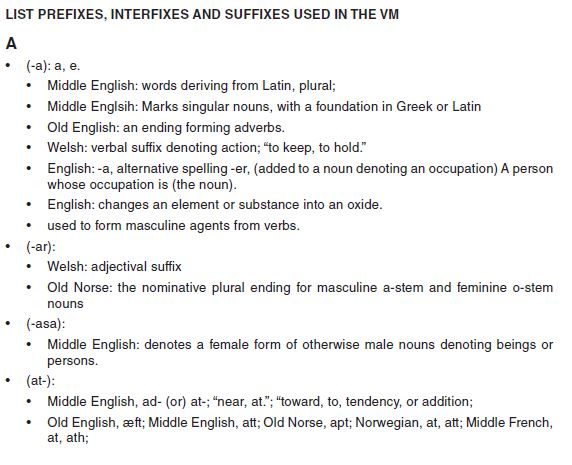
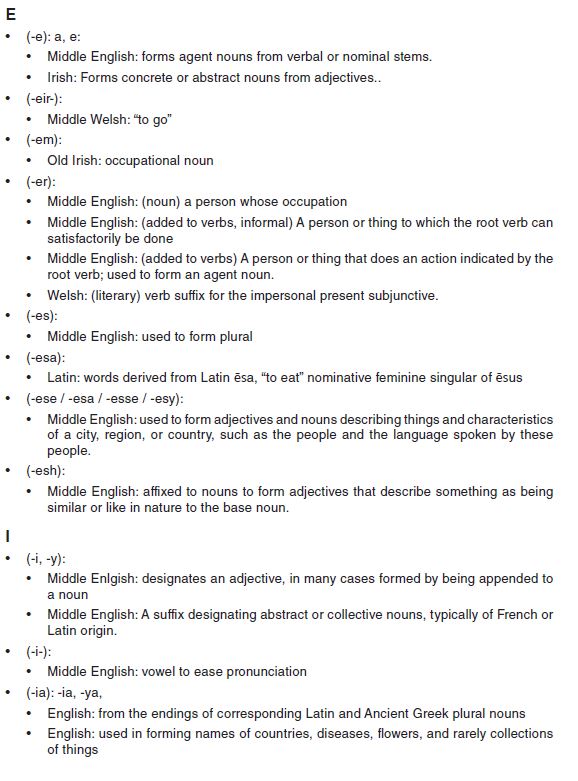
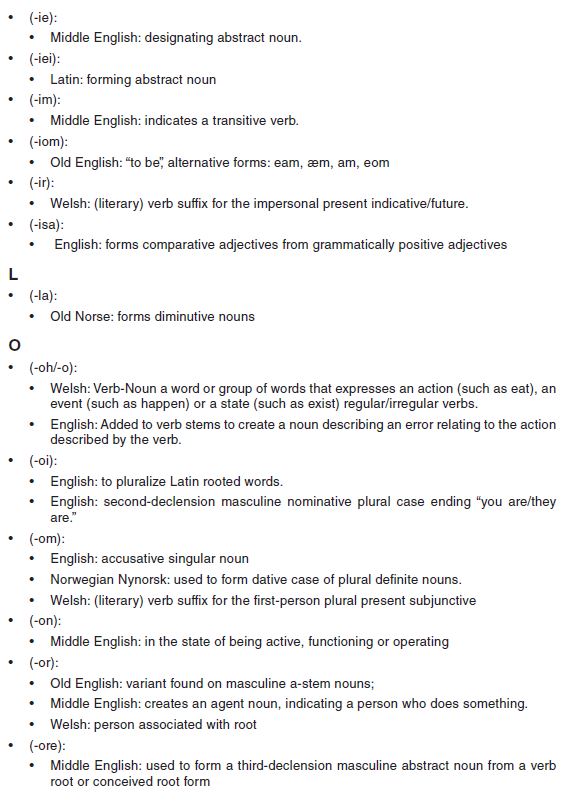
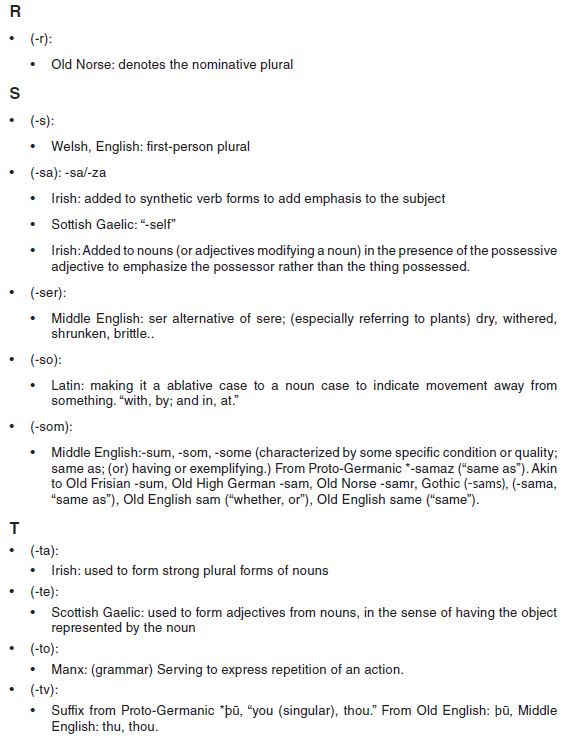
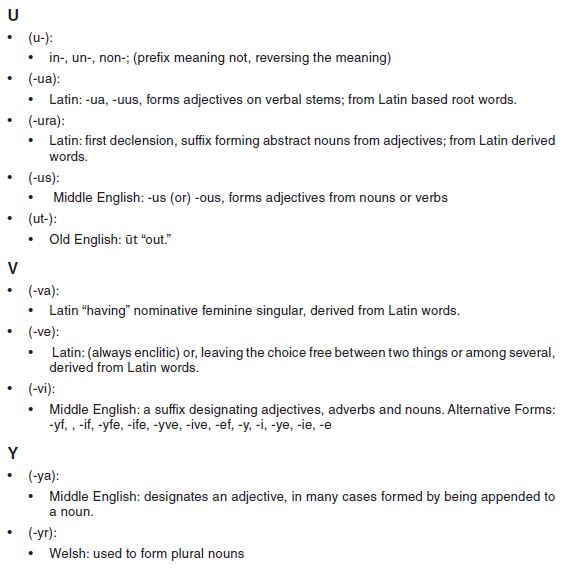
The Math abbreviations will be discussed in a later post. One should familiarize oneself with the following terms per topic: Old English law, Geodetic math, Euclidean math, Geoidal Land Surveying, Cartography, Sailing, Ship parts, clock parts.
See you all next time.
 Tucker STEM Team