Captain’s Blog 6/6/2022:
DATA:
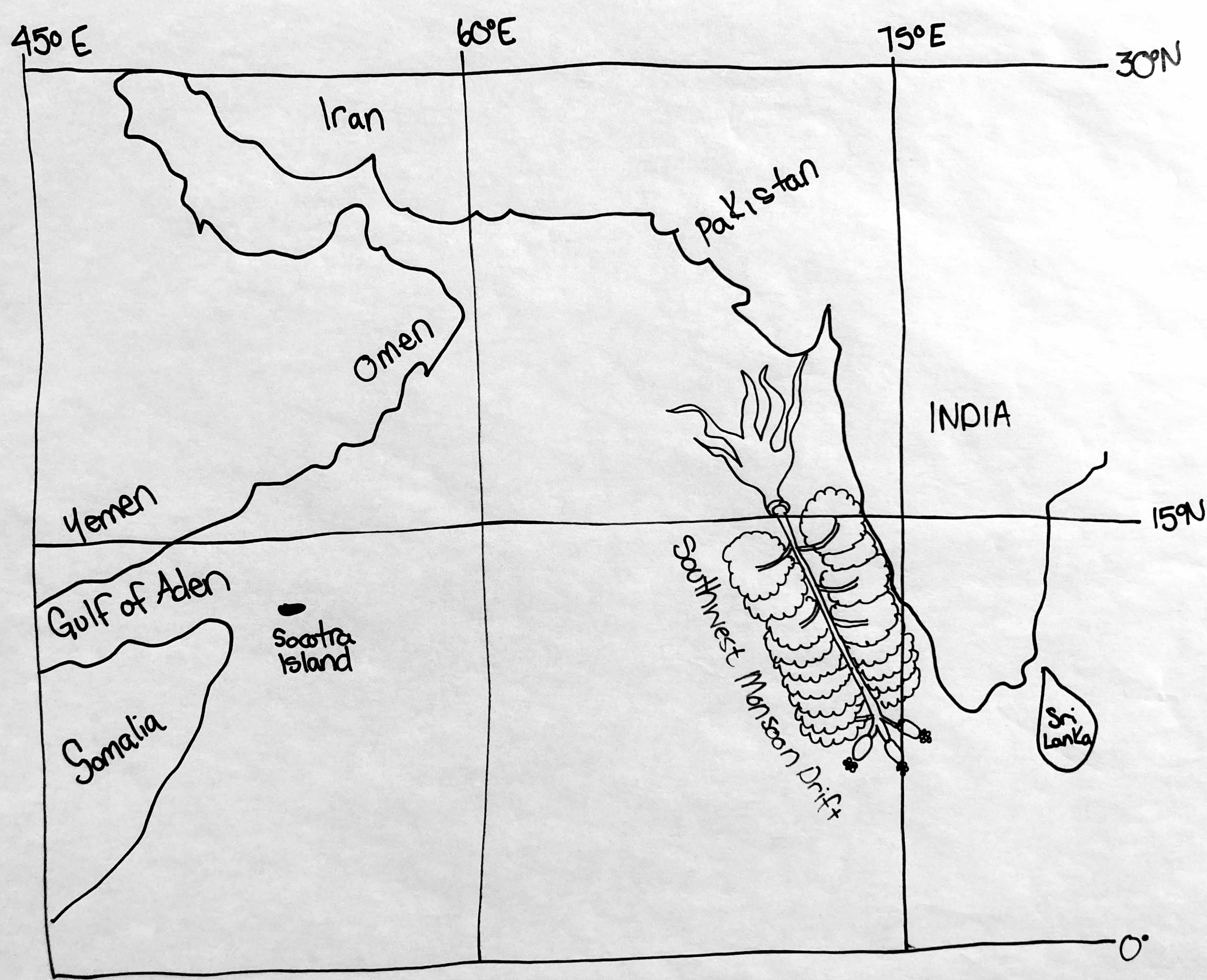
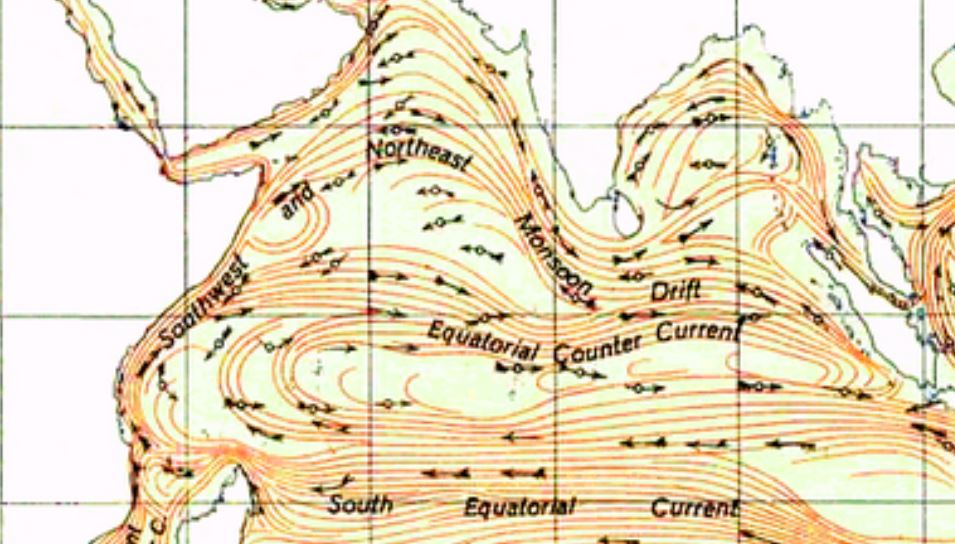
Location: NE Monsoon Drift parallels Kishkindha
Geolocation: 18°0’N/68°0’E
Ocean Currents/Gyre: Northeast Monsoon Drift
Math:
-Example of early equation using radians know in (c1400) as diameter parts
-Velocity using (c1400) kinematics by Nicole Oreme
Ethnobotany: Root system depicts India’s Monkey God Hanuman myth. Location parallels Monkey God’s place of birth Kishkindha/Hampi, India of the Monkey Kingdom.
Catalan Atlas: The lower left Folio 37v ligature is in the position of the Catalan Atlas Flag of Diogil. It is said that the Monkey God Hanuman’s birthplace was Hampi, India. The folio ligature, the flag of Diogil and Hampi India are all the same coordinates.
English Translation
Clock turns are more inactive. To activate the expedition, set apart the time fixed earlier. The authors wind measurement, witness the velocity of an orifice is weak. The measurement secant arc, momentum of the ocean’s current measurements confirm inactive. It goes rising between the allower space passes the barrier measurement.
I hope it isn’t stopping, mark whole measurement. Establish the velocity of an orifice sum of the measurement. The sounding way spherical excess of the triangle teams passing through reading. I hope you are stopping, the wind earlier is a whole measurement, the wind marks the method of the right period of time hands 3πn.
Reading is up, the upmost sine radius 2πn, observe sum area. I hope it isn’t stopping the measurement observation. Distracts, you get, velocity (time) 2 circle (knot) radius = to go the entire sum of the measurement, it consumes the measurement. Bottom congeals measurement. It goes the authors outer area (borders of the known world), for the measurement rhumb, you are flying up. The accurate measurement is universal, completes time measurement.
Voynicheese:
tvesa jeula jeleisa uepson rei
ser uei uler er ue uer som
jetuek va uek som sa
sver salera sver som
suer jelei a tuek son
aeter aluer rom ela
jeluer som
jeler uem uilua som
seruer va som som
rem via e tem uia leh
jelem uer er ulei som
uer veia viom selesa
rele cccn
leson upom uper esr
rccn uieta som son
jeler som uelom
detuer jetom a tyei r
ealya som som esa
som atoin jeloi som
a ue utia atei som r
evule se som uleid
jelei alem ue ulia
ale uei som
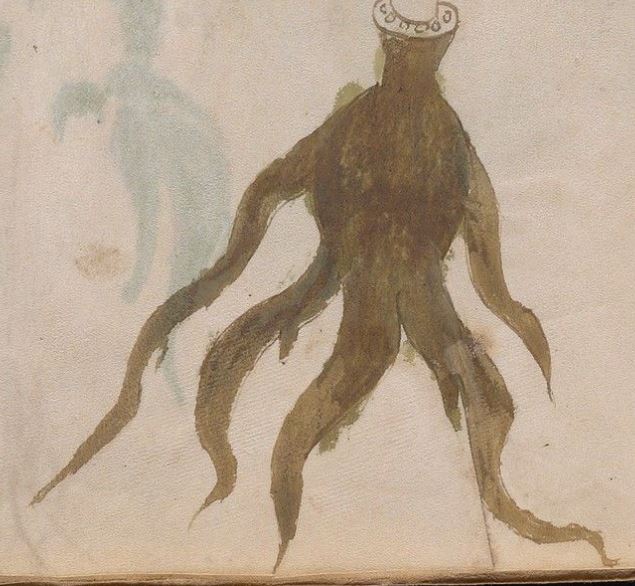
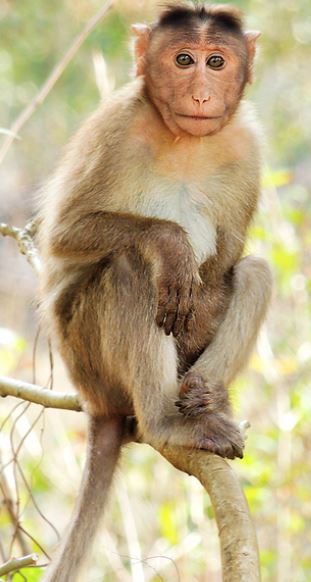
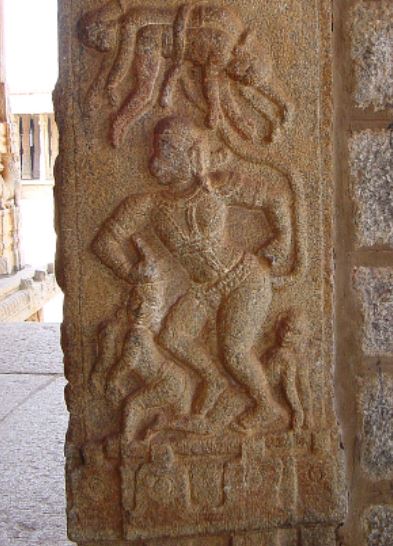
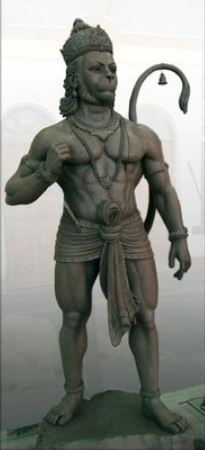
NOTES: Folio 37v also has an unusual humanoid looking root system with a monkey looking tail which closely resembles the Bonnet Macaque of Southern India. The important location indicator the authors of the Voynich want you to be aware of is the the Bonnet Macaque lives South of the Tapati River.
The Bonnet Monkey is also the type of monkey that closely resembles Hanuman the Monkey God. Hanuman in some legends is called the son of the deity Vayu (Wind god). In a Hindu version of his childhood legend, which is found in Jain texts such as the 8th-century Dhurtakhyana, Hanuman’s Icarus-like leap for the sun proves to be fatal and he is burnt to ashes from the sun’s heat. His ashes fall onto the earth and oceans. Gods then gather the ashes and his bones from land and, with the help of fishes, re-assemble him. They find everything except one fragment of his jawbone. His great-grandfather on his mother’s side then asks Surya to restore the child to life. Surya returns him to life, but Hanuman is left with a disfigured jaw. Hanuman is said to have spent his childhood in Kishkindha.
Go to Folio 38r

